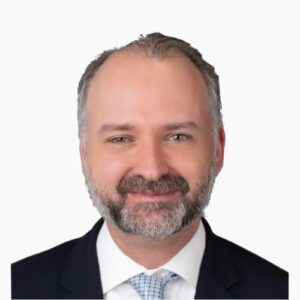
Elad Sharon
Director of Clinical, Translational & Immunotherapy Toxicity Program Dana-Farber Cancer Institute
Elad Sharon is a medical oncologist and drug developer, that serves as Co‑Chair of the Alliance Immuno‑Oncology Committee and is Clinical and Translational Director of the Immunotherapy Toxicity Program at Dana‑Farber Cancer Institute. An Associate Professor of Medicine at Harvard Medical School, they focus on the development, evaluation, and safe implementation of novel immunotherapies. Previously, he spent over a decade at the National Cancer Institute, where he led innovative experimental therapeutics programs and served as Co‑Chair of the Cancer Moonshot Adult Immunotherapy Implementation Team. His work spans early‑ to late‑phase clinical trials, biomarker development, and global collaboration in oncology research.
Seminars
As ADC pipelines grow more complex, traditional toxicology approaches alone are no longer sufficient to anticipate the multifactorial drivers of toxicity. This workshop explores how artificial intelligence, computational toxicology, and pharmacogenomic insights can be integrated to predict toxicity risks earlier and guide the design of safer ADCs. By combining multi-omic datasets with predictive modeling, attendees will learn how to identify patient-specific risk factors, anticipate organ-specific toxicities, and refine candidate selection before clinical development. Attend this workshop to harness data driven approaches for safer ADC development by:
- Applying AI to identify toxicity risk patterns, using machine learning trained on preclinical and clinical datasets to link payload, linker, and antibody properties with organ-specific toxicities.
- Building computational models to predict ADC toxicity and integrate PK, biodistribution, and payload-release data into PBPK and systems pharmacology models to forecast exposure and dose-limiting toxicities.
- Leveraging pharmacogenomics to uncover patient risk factors to identify genetic variants affecting Fc-receptors, immune pathways, and drug transporters that influence ADC clearance and toxicity susceptibility.
- Applying large language models to capture and structure real-time toxicity events from clinical data sources, enabling more comprehensive and timely identification of ADC-related adverse events
- Developing a clinically annotated framework for systematic collection of patient samples across clinical trials and standard-of-care settings, supporting integrated analyses of ADC toxicity mechanisms
- Leveraging advanced analytical techniques to characterize toxicity profiles and compare them with analogous sporadic events, enabling deeper mechanistic insights and more informed strategies for toxicity prediction and management
The disconnect between observed clinical toxicities and preclinical predictions continues to challenge ADC development and patient management. Treatments that appear tolerable in early studies can lead to unexpected adverse events in patients, complicating dosing decisions and long-term care. Join clinicians, clinical pharmacologists, and translational experts as they explore how to integrate clinical data, PK/PD insights, and real-world evidence to better interpret safety signals and inform treatment strategies by:
- Interpreting clinical safety signals to inform treatment decisions, exploring how systematic analysis of patient-level data can support dose modifications, treatment interruptions, and proactive toxicity management in clinical practice
- Leveraging translational and pharmacokinetic insights to contextualize toxicity risk, examining how physiologically based pharmacokinetic modeling and cross-species data can help clinicians anticipate adverse events, understand variability in patient response, and apply trial learnings to real-world populations
- Applying exposure-response relationships to guide dosing in the clinic, discussing how evolving dose optimization strategies, including those aligned with Project Optimus, can move toward individualized dosing approaches that balance efficacy and safety for different patient subgroups